
Notes on loving
from a nonbinary twenty year old

Recently, I have been reflecting on loving and what I want from it. I feel as though, primarily, loving your friends is the most important practice. This is the only resource that can teach me about how I love and how I love to be loved. It also shows me the reality of who I am, and what makes me feel safe enough to put myself in vulnerable positions. My concern for myself is sustainability. In the past, I rush headfirst into things too quickly and often bypass my body’s signals of danger, or I sacrifice my comfort to be accepted. I long for a person who I can share all my loving urges to. It is nice to have a first resort, an outlet for what has been denaturalised in a way (queer loving, radical loving). But lack of patience never reaps the right results. Sustained love is something repetitive, dedicated, and consistent. Deep down, I fear that this reduces the size of love. I have been challenging this thinking, and have learnt to see love in much smaller actions, and to validate my perspective as reason enough for love to exist. Love is like history, it is a lifetime scale. To make love big, I have to make it small, and that starts with my own mindset and how available I make myself to experiencing love. That’s to say, if I put myself in a specific situation out of hope and reframe my thinking to disregard myself as an unloveable failure and instead see myself as acting out of love for myself and therefore as a receiver of love, I am one.
What do I want in a lover? How do I feel seen?
Ruminating on this question leads me to imagine a conversation around a table, seated with friends. This is accountability. This question starts with how I have a relationship with the world.
Like when a beat travels through your body and you’re compelled to move subconsciously, I am a vessel. I am no mirror, I take ownership of my perspective. How does a lover threaten and empower this, particularly when thinking from a gendered or racial point of view? I have enabled that when rushing, so to have a lover I must first grow into myself and be practiced in acting upon my boundaries. This is a lifetime practice and it is imperative to start now.
I am a vessel, I am not a person manifest. I say this in lieu of Buddhism, where the idea of a static and permanent self must die. So thinking of myself as a vessel empowers me to react to the world, rather than seeing all my feelings and reactions as a dictation on my personhood entire. This relieves shame from within me, as I can understand my thoughts as reactionary to my environment, to an extent out of my control and better see when they do become things I must challenge or reflect upon.
With this understanding of myself, I still do retain a sense of self. I know myself, but I do not need to be able to explain that self nor do I need to maintain that self.

When romantic loving comes into question then, my image of what I want in a partner becomes less about their permanent traits, and more about the experience of being with them. As two people, the environment we create is a synthesis of the parts we bring forward when we are together. Seeing relationships in this way helps me depersonalise rejection, because we are all hurt children who can act in ways not conducive to our values and principles. It also helps me refrain from dynamics which are hurtful, because I do not need to revisit or re-attempt to heal a problem, I know in that situation, I am not capable of doing so because I am vulnerable and reactionary, prone to lashing out or becoming more hurt.
I think about the parts of myself I love and which I wish always that I could free, and this guides me.

I want conversations of inquiry, gemini in venus is where curiosity leads. Always a curious child, I love the rush of intrigue and learning, especially when it is another person with mutual interest.
Thinking of the voice which I habitually keep silenced, from the need to be accepted which I’m learning to use, I see why men think talking at a woman is romantic. Well, I don’t actually think they are consciously thinking it. You know, when a man tries to hit on you by monologuing about himself for 10 straight minutes and as an active and engaged listener you display signs of common decency interest and ask follow up questions, only for him to think this is you reciprocating romantic pursuit. I think the fact that men habitually do this, that so many people have this experience of men, is something I can understand. It is intimate to have your thoughts and inner feelings out in the open taking up a populated space. However, what I am sensitive to, which I think these men lack, is the possibility that my listener does not give a fuck or find me remotely interesting. The obvious difference is that there are power dynamics here which men need to realise they reinforce. Nonetheless, I imagine I understand why this happens at all. Masculinity is a very lonely pursuit. My experience is that it is empowering, to come from this place of being silenced, to talk about yourself and share the thoughts that have been occupying a space within you - a space which you are normally not so conscious of which reconfigures how you’re seeing the world at that present time. This is why I earlier stressed the importance of being in tune with your environment and practicing intimacy in a rainbow of ways. I don’t think it can be easy to love if you are not used to doing it.

I imagine platonic conversations to be excited and distracted and a constant return to ‘what were we just talking about? oh yeah -’ This is a very normal and fun way to converse and I think it is very much a platonic form of bonding. Not strictly reserved for only the platonic, but for a non-romantic environment. What is important to me, however, is not to use my listener as a mirror or microphone but to actually have it be reciprocated. I love longer, drawn out conversations where pauses are a part of the conversation and we talk one at a time. Basically, I want to dwell, and once I have said my piece, role reverse. I guess this is technically the same as the platonic conversations, healthy conversations, which I just described, but I think to render them romantic they become slower, more patient and soft.
The thing about queer relationships is that the tendency for intimate conversation is far easier to attain. They feel like revealing oneself on your own terms. I often hear straight women give love advice as though it is a list of actions to do which reaps a set result. Don’t give him too much attention because men prefer women who are unattainable, they like the ego boost of the chase. Display your life and interests aesthetically so that you seem occupied and busy, so he feels special when you cut into your routine or obligations for him. And you should cut into your routine and obligations for him. I cant fuck with that shit because it feels painfully obvious how that logic is so sexist and directly correlated with sexual violence and abuse. I have been recently wondering if I will ever meet a man who is actually able to actualise a queer relationship with me. Even queer men I have been with treat me like a woman. It is so tiring being with men who have a loaded bag of misogyny racism transphobia and heterosexism they just bring with them everywhere. I am not your parent.
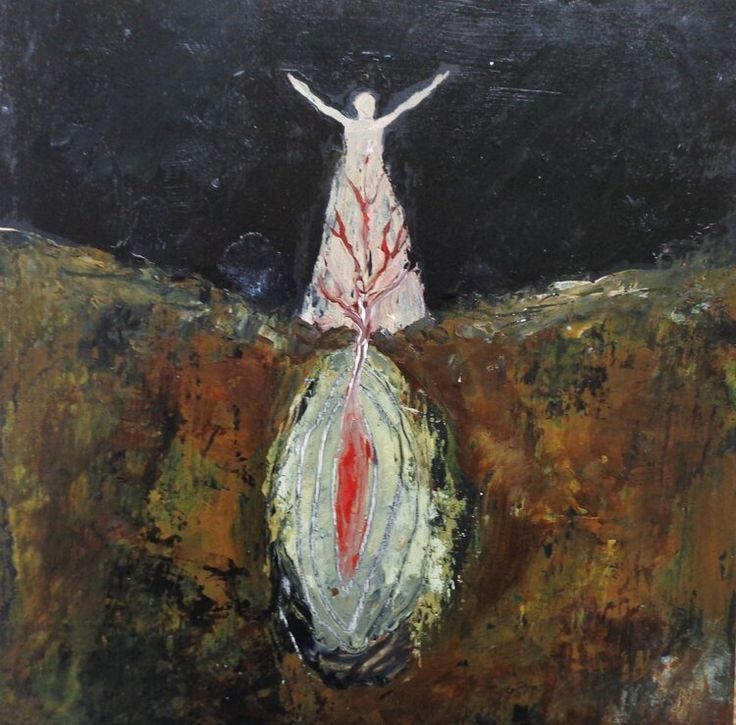
To me, romance is real. It is a tangible and very sensory thing. I want to be safe to set my own terms. To do this I have to teach my brain I am indeed safe in my own body, and that I can get myself out of unsafe situations. I must do this by practicing it in less charged settings (and ideally in all settings). In a partner, I want us to both be students together. I want the intoxicating thrill of, the sobering process of, only having questions to ask and learning and understanding and seeing. I just want a connection, I don’t know the terms. I just want to know my body enough to let me be led astray. I want someone who never has to prove they can make me safe because I already am.
I really cannot let myself react to the unknown with only fear because I know that my imagination alone is not the container of all the best the universe has to offer. The imagination of a person with power is so limited in self critique, and the subjugated find it all so obvious because it is the environment from which they speak. I hope I make clear the intricacies of privilege and empathy and subjugation in my point of view.